
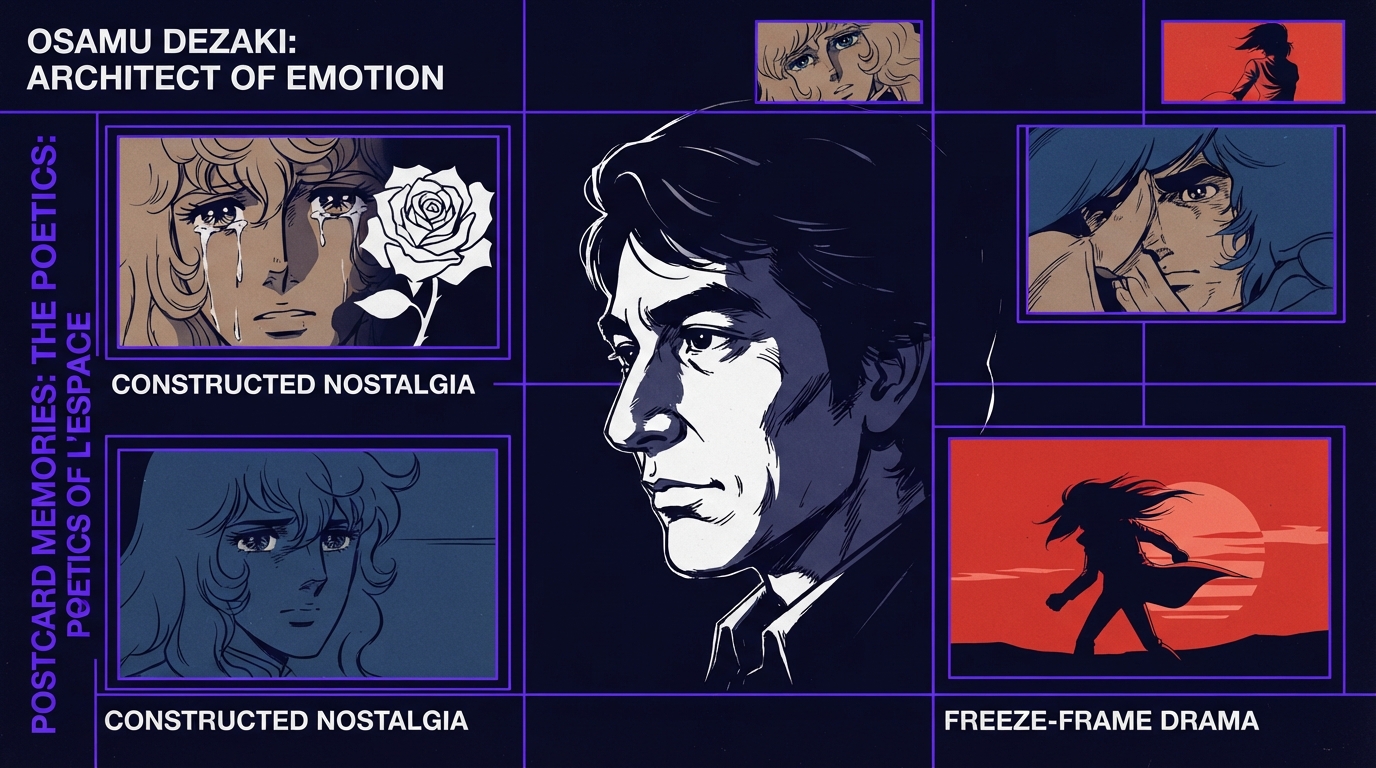

The work of Osamu Dezaki has been a profound inspiration for countless artists, myself included. His approach to the medium fundamentally changed how stories could be told on screen. Let me take you on a journey through the remarkable legacy of this animation virtuoso and explore how his techniques continue to shape the industry today.
The Pioneer’s Journey
Starting his career at Mushi Production under the legendary Osamu Tezuka, Dezaki quickly proved himself to be a visionary and would later become one of the most influential figures in anime history. Alongside his inseparable creative partner, character designer Akio Sugino, and producer Masao Maruyama, he helped establish Madhouse studio. This newly formed powerhouse would eventually become a cornerstone for mature, sophisticated, and visually striking animation in Japan.
The Magic of Postcard Memories
What particularly drew me to Dezaki’s work—especially when I was directing and animating the Super Héros music video for the French rapper Demi Portion—was his revolutionary Postcard Memory technique. These stunning still images, which sometimes replace entire sequences of animation, were initially developed as a clever cost-saving measure but quickly evolved into a powerful artistic statement.


The technique involves using celluloid with only the character outlines, while adding color on paper underneath to create a rich, watercolor-like effect. These moments, often reminiscent of traditional Japanese woodblock prints, can express far more than several seconds of fluid movement ever could. They freeze crucial narrative beats in time, allowing the viewer to fully absorb their heavy emotional weight.
A Revolutionary Visual Toolkit
Dezaki was far from a one-trick pony; his technical arsenal reshaped the visual grammar of anime. He pioneered the use of paraffin effects on celluloid to create unique smoke and atmospheric textures, and his dramatic approach to lighting and shadow work soon became an industry standard. He frequently utilized off-frame light rays and split-screen compositions to masterfully enhance dramatic tension. Furthermore, his rapid and efficient storyboarding abilities set a benchmark that professionals still strive to meet today.
Throughout his career, he developed a remarkable set of directing quirks that formed his undeniable signature style. A notable innovation was the three-episode pan, where he would revisit the same scene multiple times, with each viewing revealing new layers of meaning and emotion. But perhaps his most celebrated technique alongside the Postcard Memory was Harmony—a cinematic device where time itself seemed to pause, transforming crucial, life-altering moments into stunning, illustration-style paintings that burned themselves into the viewers’ memories.
His mastery of lighting effects was equally groundbreaking. Using a clever combination of cel overlays and twinkling lights during film shooting, he created what became known as the incident light technique. This method produced magnificent rays of light pouring across the screen. At the same time, his paraffin shadow technique painted portions of the screen in deep, theatrical blacks, creating dramatic spotlight effects worthy of the finest stage productions.
The Master’s Touch and a Legendary Filmography
What made Dezaki’s work particularly special was his deeply cinematic approach to animation. He believed heavily in adaptation over direct, literal translation, choosing instead to focus entirely on emotional impact and character development. His lifelong partnership with Akio Sugino was crucial in this regard, as Sugino’s realistic, detailed character designs perfectly anchored Dezaki’s dramatic visual flair.
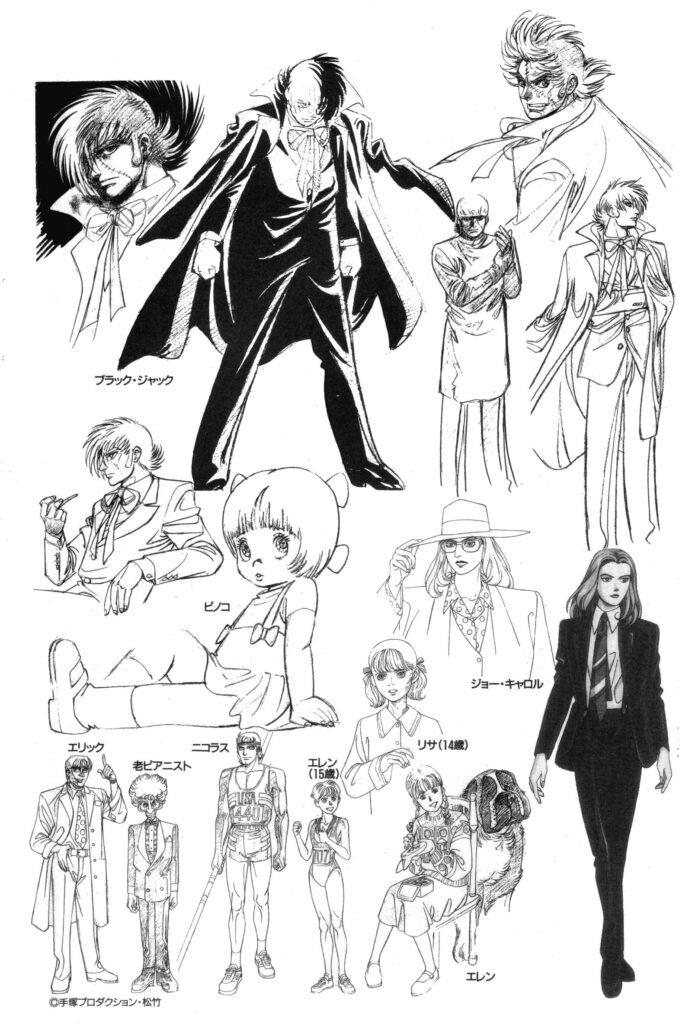
Dezaki’s filmography reads like a definitive history of mature anime. He pushed the boundaries of animated storytelling with the groundbreaking boxing drama Ashita no Joe in the early seventies, and followed it up at the end of the decade with the sophisticated historical intrigue of The Rose of Versailles. Entering the 1980s, he demonstrated his incredible versatility with the sci-fi adventure series Space Adventure Cobra. Shortly after, he delivered a technical masterpiece with Golgo 13: The Professional, which famously featured the very first use of CGI in anime. He later perfected his signature techniques through the incredibly atmospheric Black Jack OVAs.


Ashita no Joe (1970-1971): A groundbreaking boxing drama that pushed the boundaries of animated storytelling
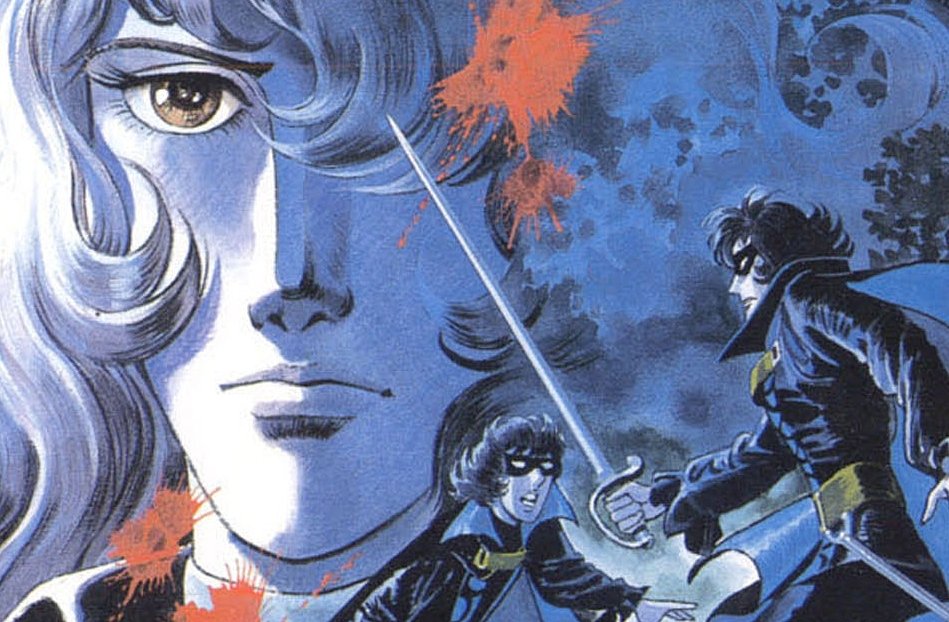

The Rose of Versailles (1979-1980): A sophisticated historical drama that showcased his mature narrative style


Space Adventure Cobra (1982): An adventure series that demonstrated his versatility


Golgo 13: The Professional (1983): Perhaps his technical masterpiece, featuring the first use of CGI in anime
A Personal Connection Across Decades
I first discovered these striking images during the lunch breaks that split the school day in two back in 1990s France. At the time, French television programming broadcast a massive wave of Japanese animation from the 70s and 80s. While I didn’t know it was Osamu Dezaki’s work sitting behind the screen back then, those deeply impactful images—held on screen for several breathless seconds—left an indelible impression on my young mind and ultimately shaped my own artistic sensibilities.
An Enduring Legacy
Dezaki’s influence extends far beyond his own spectacular body of work. His innovative techniques and emotionally driven storytelling approaches have inspired countless renowned directors, including cinematic heavyweights like Yoshiaki Kawajiri and Satoshi Kon. His unique ability to create emotional depth strictly through visual innovation has become a fundamental part of the global animation lexicon.
Sadly, Osamu Dezaki passed away in 2011 due to cancer, but his artistic spirit lives on in every dramatic pause, every stylized frame, and every emotional crescendo in modern anime. His work stands as a timeless reminder that animation isn’t solely about movement—it is about creating profound moments that resonate in viewers’ hearts long after the screen goes dark. Knowing exactly when to pause and let the emotion sink in is just as important as the motion itself.