
For non-profits, foundations, and public sector organizations, the annual impact report is the flagship publication of the year. It validates stewardship to donors, presents outcomes to boards, and sets the narrative for upcoming initiatives. Increasingly, it also faces a legal and ethical mandate: strict compliance with digital accessibility standards, including WCAG 2.1 AA.
Too often, communications teams perceive accessibility compliance as a visual compromise. There is a persistent myth that accessible design must look sterile, utilitarian, and devoid of editorial flair. That misconception results in dull reports that fail to engage the very audiences they were written to inspire.
High-end design and universal accessibility are not opposing forces. When executed by an experienced editorial designer, accessibility principles clarify hierarchy, sharpen typography, and make complex data visualization significantly more legible for every reader.
Contrast Ratios Beyond Black and White
WCAG 2.1 requires a minimum contrast ratio of 4.5:1 for standard body text and 3:1 for large display text and user interface components. Many brand palettes feature soft secondary pastels (mint greens, light blues, muted greys) that fail this threshold when placed over white paper backgrounds.
Rather than abandoning brand colors, create dedicated high-contrast pairings within your editorial style guide. Use muted tones as background floods or non-critical decorative accents, while anchoring data points and narrative paragraphs in deep, high-chroma tones. Contrast is not about eliminating color; it is about intentional contrast placement.
Accessible Data Visualization Without Confusion
Infographics, financial pie charts, and growth timelines frequently rely entirely on hue to differentiate categories. For readers with color vision deficiencies, four distinct pastel pie slices can merge into an indistinguishable grey wash.
Accessible data design enforces dual coding: combining color with secondary visual signifiers such as distinct line textures, clear numeric callouts placed directly on the data bar, and direct text labeling rather than detached color legends. Direct labeling not only passes compliance checks; it drastically speeds up comprehension for busy executives and board trustees.
Structuring the Document Tree: Tagged PDF Architecture
Exporting an InDesign file to PDF does not automatically make it readable by assistive technology. Screen readers rely on an underlying logical tag tree (H1, H2, H3, P, Table, Figure with Alt Text) rather than visual layout coordinates.
If reading order is not managed deliberately within the Articles panel during layout production, a multi-column spread might read out across columns horizontally rather than following the logical narrative column down. Real accessibility requires native document tagging, verified reading order, and descriptive alternative text for key photographs and infographic assets.
Typographic Legibility in Long-Form Reading
Long-form readability hinges on optical fundamentals: appropriate x-height, open counters, generous line spacing (leading at 140 to 150 percent of font size), and comfortable line lengths (50 to 70 characters per line). Avoid centered body text, ultra-condensed headline weights, and justified margins that produce uneven typographic rivers.
A Smooth Annual Production Cycle
Producing an accessible 40-page impact report should not be an exhausting two-month battle with compliance software. With an embedded design partner who builds accessible paragraph styles and tag structures from page one, your team receives an executive document that honors both your mission and your readers.
In Canadian and international communications, bilingual delivery is not an afterthought. It is a legal, operational, and cultural requirement. Yet most creative pipelines treat translation as a late-stage paste job. A layout or motion sequence is designed and perfected in English, approved by internal leadership, and then handed off to a translator.
Two days before launch, the French copy arrives. Instantly, carefully balanced headline hierarchies collapse. Subtitle text spills beyond the lower third boundary. Card components in digital reports overflow their bounding boxes. Buttons break into awkward two-line wraps.
This is not a failure of translation. It is a predictable typographic reality known as text expansion. When translating from English to French, character and syllable counts expand by an average of 20 to 30 percent. If your visual system is not built with dynamic tolerance from day one, you spend emergency budget hours rebuilding completed files.
The Root Cause: Structural Differences in Syntax
French syntax relies on prepositional phrases where English uses compact compound nouns. A three-word English title like Water Conservation Strategy naturally becomes Strategie de conservation de l eau. The French version is not merely longer in character count; it contains more spaces, accent marks, and descending characters that disrupt vertical leading.
In kinetic typography and motion graphics, this expansion creates a double constraint: spatial area and reading duration. Viewers need roughly 0.3 seconds per word to read on-screen text comfortably. When a phrase gains five syllables in French, an animation timed tightly to an English voice track must either accelerate to an unreadable velocity or receive adjusted visual pacing.
Four Rules for Building Bulletproof Bilingual Systems
1. The 30 Percent Cushion Rule in Layout Grids
When drafting master templates in InDesign, Illustrator, or web Figma files, never fill container boxes to visual maximums in English. Every primary text frame, callout container, and navigation element must maintain at least 30 percent negative space margin. If an English headline fits comfortably on one line, test immediately with a dummy French string to see if the two-line break remains balanced.
2. Modular Lower Thirds and Kinetic Type Anchors
In motion graphics software, avoid fixed-width background plates for name keys and animated captions. Build responsive box rigs that calculate text layer width automatically using native expressions. When French copy replaces English copy, the container plate stretches organically without manual keyframe re-timing.
3. Choosing Typefaces with Strong Diacritic Support
Many display typefaces popular in corporate branding were drawn without careful attention to French accents (acute, grave, circumflex, cedilla). In uppercase titles, accents frequently collide with capital letters or get clipped by tight line heights. Audit your brand typefaces early: verify that capital accents possess dedicated vertical clearance so line spacing does not shift between language editions.
4. Parallel Voiceover Timing Over Direct Dubbing
For explainer videos and campaign spots, recording French audio over an animation locked strictly to English beats leads to rushed delivery. The superior method is pacing the master animatic with flexible visual buffer beats (1 to 2 seconds of atmospheric hold) between major narrative sections. This allows the French voice talent to speak at a natural, authoritative cadence without forcing unnatural cuts.
Predictable Turnarounds Through Structured Retainers
Organizations publishing across dual official languages need creative partners who treat bilingual execution as standard operating procedure. Under an embedded monthly retainer, French and English deliverables are developed simultaneously, ensuring equal visual quality and zero last-minute panic.
Every modern communications campaign is inherently cross-platform. A thirty-second explainer or program announcement needs to live on a website header (16:9 widescreen), run inside mobile stories and reels (9:16 vertical), and circulate through LinkedIn and Instagram feeds (1:1 square).
Yet most campaigns are still produced through an obsolete legacy workflow: the entire animation is built and finished in traditional 16:9. Then, forty-eight hours before distribution, someone asks the editor to export 9:16 cuts for TikTok and Instagram. The result is almost always disastrous. Crucial character animation gets sliced in half, kinetic text collides with interface buttons, and key focal points drift off-screen.
Retrofitting a completed widescreen motion graphic into a vertical format is slow, expensive, and visually compromised. The solution is modular multi-format planning established on day one of storyboarding.
The Core Challenge: Radical Geometry Shifts
Moving from 16:9 (1920×1080) to 9:16 (1080×1920) is not a minor adjustment; it is an inversion of visual physics. In widescreen, compositions flow horizontally, with primary subjects flanked by contextual background space and side-by-side callouts. In vertical, visual space is tall and narrow, demanding stacked hierarchies and central column prioritization.
Furthermore, native mobile platforms impose heavy interface overlays. On TikTok and Instagram Reels, the bottom 25 percent of the screen is obscured by creator handles, captions, and sound tags. The right-hand margin is crowded with engagement buttons. If your kinetic typography is not kept within strict safe zones, key messaging becomes impossible to read.
The Three-Step Modular Framework
1. Unified Composition Guides (The Golden Square)
In After Effects, Illustrator, or Moho, establish a compound guide overlay on every production artboard. At the center sits a 1080×1080 square. Inside that square sits the 9:16 vertical safety column (leaving 200px clear at top and bottom for app UI). Every primary narrative action, key character pose, and core typographic message is composed strictly within this shared focal zone.
The widescreen wings (left and right of the 1080 center) carry supportive environmental art, texture, and cinematic depth. When the project is switched to vertical, those outer wings crop out cleanly without losing a single story point.
2. Dynamic Text Anchors and Break Points
Widescreen allows for sweeping four-word horizontal statements on a single typographic baseline. In vertical format, that same phrase must split into a dynamic three-tier stack. By establishing typography presets that re-stack modularly, an artist can toggle from 16:9 to 9:16 with zero keyframe destruction.
3. Background Asset Generosity
When drawing background illustrations and environment layers, illustrate vertical extensions (top and bottom) from the start. Painting an extra 400 pixels of sky and ground during the initial styleframe stage takes twenty minutes. Redrawing backgrounds after 16:9 delivery to fill vertical voids takes hours.
Maximizing Creative ROI Across Channels
When multi-aspect versioning is baked into the foundation, organizations multiply the reach of every creative investment. Rather than commissioning three separate videos, one cohesive modular production generates an entire cross-platform campaign kit with flawless visual integrity.
Traditional creative intake is plagued by transmission loss. A client team spends two weeks assembling a 15-page briefing deck filled with competitor moodboards, demographic personas, and generic mission statements. An account manager translates that deck into internal tickets. By the time it reaches the animator or layout designer, the real operational objective has been completely obscured.
After 14 years in broadcast animation and direct client execution, I abandoned long intake forms. Instead, every project begins with a 30-minute discovery conversation focused on four non-standard questions that standard agency briefs leave out.
The 4 Questions That Actually Matter
1. What is the real internal context behind this initiative?
Is this campaign answering a recent policy critique? Are you defending an annual budget allocation before a board of trustees? Knowing the political and organizational reality dictates tone far better than a list of adjectives like bold or modern.
2. How should this asset behave across physical and digital screens?
Will viewers watch this with sound muted on mobile feeds? Does it need to loop seamlessly on a keynote presentation stage? Will this report be printed on desktop office printers or viewed on mobile PDF readers? Physical context dictates typography size, aspect ratio, and contrast.
3. The Fear Question: What would make this project feel like a total failure?
Clients often hesitate to state what they hate. Asking directly what visual outcome would cause embarrassment eliminates entire categories of aesthetic risk before storyboard sketches begin.
4. Who holds final, uncontested sign-off authority?
Nothing inflates production budgets faster than surprise feedback from an executive who was never briefed during initial concept phases. Identifying the decision maker early protects the delivery timeline.
The One-Paragraph Contract
At the conclusion of the 30-minute intake, I synthesize the discussion into a single concise paragraph summarizing the goal, primary constraint, and single visual promise. Both parties sign off on that paragraph. That concise agreement becomes the sole creative filter against which every subsequent storyboard and animatic cut is evaluated.
For more on preparing your visual foundation before intake, see Is Your Brand Ready for Web, Social, and Motion?
Every creative agency and independent designer knows the frustration of the vague creative brief. A two-line email requesting a bold, engaging campaign video or an annual report that pops almost always guarantees revision loops, missed deadlines, and budget exhaustion.
The standard advice to communications directors is usually to write longer, more comprehensive briefs. But after 14 years of delivering broadcast television graphics, agency campaigns, and corporate visual systems, I have found that longer documents rarely solve the problem.
A brief fails not because the client did not write enough paragraphs, but because the underlying visual system was never stress-tested for digital, motion, and multi-format deployment in the first place.
The Missing Foundation: The Multi-Channel Brand System
Most brand guideline documents are designed for static print: a primary logo, three brand colors with CMYK codes, a corporate typeface, and two rules about logo clear space. These static PDF guidelines completely break down the moment assets enter modern multi-channel production.
Before commissioning your next campaign spot, explainer video, or social motion suite, audit your brand foundation against these four production criteria:
1. Web & Responsive Digital Hierarchy
Do your typography and color styles include verified contrast ratios that comply with WCAG accessibility standards? Do you have defined styling for secondary badges, metric callouts, and interactive button states? When digital layouts need to shrink from desktop monitors down to mobile screens, an undefined secondary hierarchy creates unreadable layouts.
2. Multi-Format Social Aspect Ratios (16:9, 9:16, 1:1)
A campaign cannot live in widescreen alone. Assets must deploy across LinkedIn feeds (1:1 square), YouTube or web embeds (16:9 widescreen), and Instagram Reels or TikTok (9:16 vertical). If your brand illustrations and typography are not designed modularly, vertical cuts chop off critical copy or push logos underneath app UI buttons.
3. 2D Motion & Kinetic Behavior
How does your logo enter a frame? Does your typography snap in with clean kinetic cuts, or glide with subtle easing? Answering these motion behavior questions upfront prevents every new animator or contractor from inventing conflicting movement styles for your organization.
4. Executive Decks, AGM Decks & Annual Reports
Campaigns generate momentum, but leadership presentations and annual impact reports secure funding and stakeholder trust. Your brand system needs clean data visualization presets, slide master templates, and accessible editorial layout rules that turn dense annual reports into compelling reading.
The Foundation System as an Optional, Sensible Investment
For organizations planning recurring marketing or policy campaigns, developing a comprehensive multi-channel brand system is an optional, highly sensible upfront investment. It transforms ad-hoc guesswork into a reliable, repeatable production machine.
Once this foundation is established, writing campaign briefs takes 30 minutes instead of days. See our companion guide on The 30-Minute Intake: Why a One-Paragraph Brief Beats a Ten-Page Document for how an authentic intake conversation locks in project direction before a single frame is animated.
For communications directors and marketing leads, managing a recurring content calendar is rarely a question of creative vision. It is almost always a procurement and workflow bottleneck.
When campaigns, annual impact reports, funder presentations, and multi-channel motion assets need to roll out continuously, organizations typically evaluate three traditional paths: hiring ad-hoc freelancers, retaining a traditional agency, or opening a full-time in-house position. Each comes with hidden operational costs that rarely appear on the initial quote.
This guide breaks down the true economics, turnaround velocity, and delivery friction of each model, and why an embedded, weekly design and animation retainer has become the standard for established organizations.
Quick Summary: Model Comparison at a Glance
| Model | Typical Monthly Cost (CAD) | Turnaround & Rhythm | Key Risk / Friction Point | Best Suited For |
|---|---|---|---|---|
| Ad-Hoc Freelancer | $1,500 to $4,000+ (Per project) | Unpredictable; dependent on current freelance availability | Onboarding fatigue, style inconsistency, lack of emergency capacity | One-off, isolated projects with flexible deadlines |
| Traditional Creative Agency | $7,500 to $15,000+ | Multi-week review cycles mediated by account reps | High billable markups ($150 to $250/hr), rigid change orders, overhead | Large national rebrands with multi-department stakeholder trees |
| Full-Time In-House Hire | $6,500 to $9,000+ (Salary + benefits) | Dedicated 40 hrs/wk, but single-skill bound | High fixed overhead, recruitment lag, idle downtime between major campaigns | Large enterprises with uniform daily production demands |
| Embedded Content Retainer | $2,500 to $5,000 (Fixed monthly) | Planned weekly drops (W1 to W4) with dedicated production slots | Requires clear monthly priority planning at kickoff | Established non-profits, foundations, and teams publishing regularly |
The Freelancer Roulette: The Cost of Perpetual Onboarding
On paper, hiring a freelancer per project feels like the lowest financial commitment. You only pay for what you commission. In practice, communications teams spend their most valuable currency, time, managing the relationship.
- The Onboarding Tax: Every new brief requires explaining brand guidelines, tone, font licensing, and organizational sensitivities all over again.
- Visual Fragmentation: A freelancer hired in March uses different typography hierarchy and color palettes than the freelancer hired in July. Within two quarters, public-facing materials look fragmented.
- Availability Gaps: When an urgent legislative update or campaign milestone arises, your go-to contractor is often booked on another studio’s project.
The Agency Trap: Paying for Account Layers Instead of Execution
Traditional creative agencies offer high polish, but their business model is built on overhead: account managers, project coordinators, senior strategists, and agency markups. A simple update to an annual report or a set of 10 social cutdowns often requires multiple status meetings and billable change orders.
When you communicate through an account manager rather than the artist actually animating the keyframes or laying out typography, nuance gets lost in translation. Turnaround times stretch from days into weeks.
The In-House Hire: High Fixed Overhead and Skill Lock-in
Hiring a full-time multimedia designer solves availability, but for established foundations and non-profits, it introduces fixed overhead that does not scale with campaign rhythms. In Canada, a senior designer commands $75,000 to $95,000 CAD base salary, before benefits, software licenses, equipment, and payroll taxes.
Moreover, visual communications require diverse disciplines: one week demands accessible print PDF layout for an AGM report, the next requires broadcast-grade kinetic type and character animation, and the next requires bilingual social resizing. Finding all of those competencies at a senior level in a single hire is exceptionally rare.
The Solution: The Embedded Content Retainer
An embedded monthly retainer eliminates procurement friction by replacing transactional quoting with a predictable production rhythm. Rather than scoping individual invoices, you secure dedicated senior production capacity every month for a flat, transparent fee.
Why Broadcast & Agency Experience Changes Delivery
With 14+ years of experience delivering under rigid broadcast television schedules and fast-paced agency campaigns, the production process is built around zero-failure operational discipline:
- Seamless Workflow Integration: I adapt directly to how your team operates, whether you coordinate through Slack, Microsoft Teams, dedicated project boards (Asana, Notion, Trello), or email. No foreign client portals or administrative hurdles.
- Broadcast-Grade File Hygiene: Every deliverable arrives with clean layer organization, strict naming conventions, and editable source files. If your internal team needs to make a minor copy change six months later, the file is ready.
- Bilingual (EN / FR) Execution: In Canada and international markets, communications must be bilingual. We build templates and layouts from the ground up to accommodate French text expansion without breaking typographic balance.
- Multi-Format Versioning: Assets are systematically delivered across native social and broadcast aspect ratios (16:9 widescreen, 9:16 vertical stories/reels, 1:1 square feeds).
What Organizations Produce on Retainer Every Month
- Annual & Impact Reports: Data visualization, custom illustration, and WCAG-accessible PDF layouts alongside print-ready exports.
- Board, AGM & Funder Decks: Executive presentations designed to engage stakeholders and clearly articulate impact.
- Campaign & Event Suites: Complete digital kits including social motion loops, email graphics, digital signage, and bilingual print collateral.
- Explainer & Training Motion: Short animated loops and motion graphics packages that turn complex policy or program goals into digestible visual stories.

The work of Osamu Dezaki has been a profound inspiration for countless artists, myself included. His approach to the medium fundamentally changed how stories could be told on screen. Let me take you on a journey through the remarkable legacy of this animation virtuoso and explore how his techniques continue to shape the industry today.
The Pioneer’s Journey
Starting his career at Mushi Production under the legendary Osamu Tezuka, Dezaki quickly proved himself to be a visionary and would later become one of the most influential figures in anime history. Alongside his inseparable creative partner, character designer Akio Sugino, and producer Masao Maruyama, he helped establish Madhouse studio. This newly formed powerhouse would eventually become a cornerstone for mature, sophisticated, and visually striking animation in Japan.
The Magic of Postcard Memories
What particularly drew me to Dezaki’s work—especially when I was directing and animating the Super Héros music video for the French rapper Demi Portion—was his revolutionary Postcard Memory technique. These stunning still images, which sometimes replace entire sequences of animation, were initially developed as a clever cost-saving measure but quickly evolved into a powerful artistic statement.


The technique involves using celluloid with only the character outlines, while adding color on paper underneath to create a rich, watercolor-like effect. These moments, often reminiscent of traditional Japanese woodblock prints, can express far more than several seconds of fluid movement ever could. They freeze crucial narrative beats in time, allowing the viewer to fully absorb their heavy emotional weight.
A Revolutionary Visual Toolkit
Dezaki was far from a one-trick pony; his technical arsenal reshaped the visual grammar of anime. He pioneered the use of paraffin effects on celluloid to create unique smoke and atmospheric textures, and his dramatic approach to lighting and shadow work soon became an industry standard. He frequently utilized off-frame light rays and split-screen compositions to masterfully enhance dramatic tension. Furthermore, his rapid and efficient storyboarding abilities set a benchmark that professionals still strive to meet today.
Throughout his career, he developed a remarkable set of directing quirks that formed his undeniable signature style. A notable innovation was the three-episode pan, where he would revisit the same scene multiple times, with each viewing revealing new layers of meaning and emotion. But perhaps his most celebrated technique alongside the Postcard Memory was Harmony—a cinematic device where time itself seemed to pause, transforming crucial, life-altering moments into stunning, illustration-style paintings that burned themselves into the viewers’ memories.
His mastery of lighting effects was equally groundbreaking. Using a clever combination of cel overlays and twinkling lights during film shooting, he created what became known as the incident light technique. This method produced magnificent rays of light pouring across the screen. At the same time, his paraffin shadow technique painted portions of the screen in deep, theatrical blacks, creating dramatic spotlight effects worthy of the finest stage productions.
The Master’s Touch and a Legendary Filmography
What made Dezaki’s work particularly special was his deeply cinematic approach to animation. He believed heavily in adaptation over direct, literal translation, choosing instead to focus entirely on emotional impact and character development. His lifelong partnership with Akio Sugino was crucial in this regard, as Sugino’s realistic, detailed character designs perfectly anchored Dezaki’s dramatic visual flair.
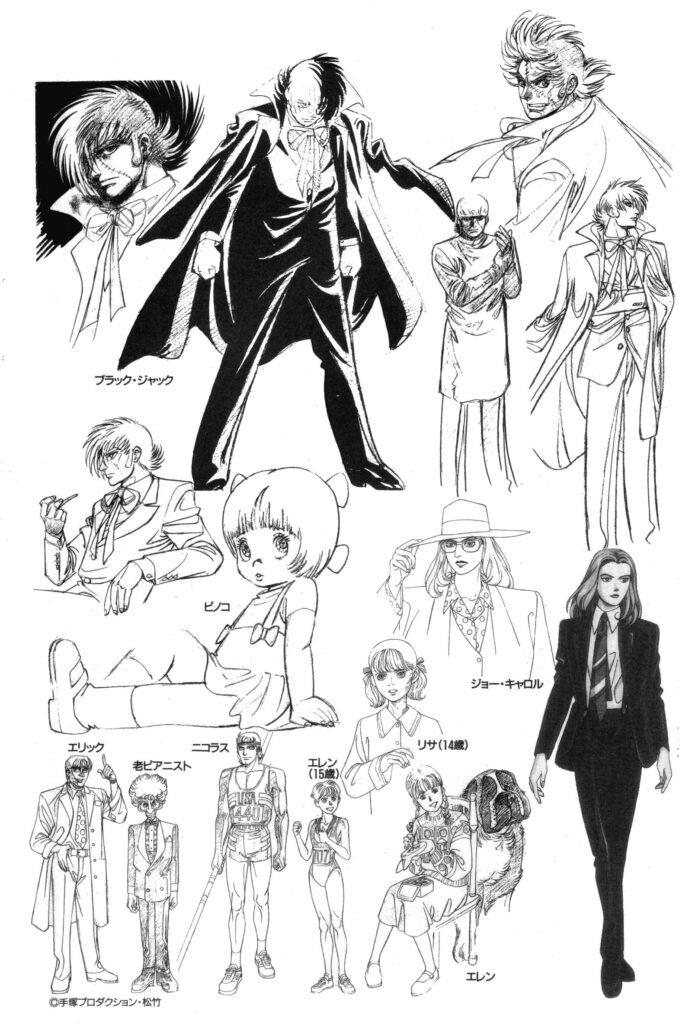
Dezaki’s filmography reads like a definitive history of mature anime. He pushed the boundaries of animated storytelling with the groundbreaking boxing drama Ashita no Joe in the early seventies, and followed it up at the end of the decade with the sophisticated historical intrigue of The Rose of Versailles. Entering the 1980s, he demonstrated his incredible versatility with the sci-fi adventure series Space Adventure Cobra. Shortly after, he delivered a technical masterpiece with Golgo 13: The Professional, which famously featured the very first use of CGI in anime. He later perfected his signature techniques through the incredibly atmospheric Black Jack OVAs.


Ashita no Joe (1970-1971): A groundbreaking boxing drama that pushed the boundaries of animated storytelling
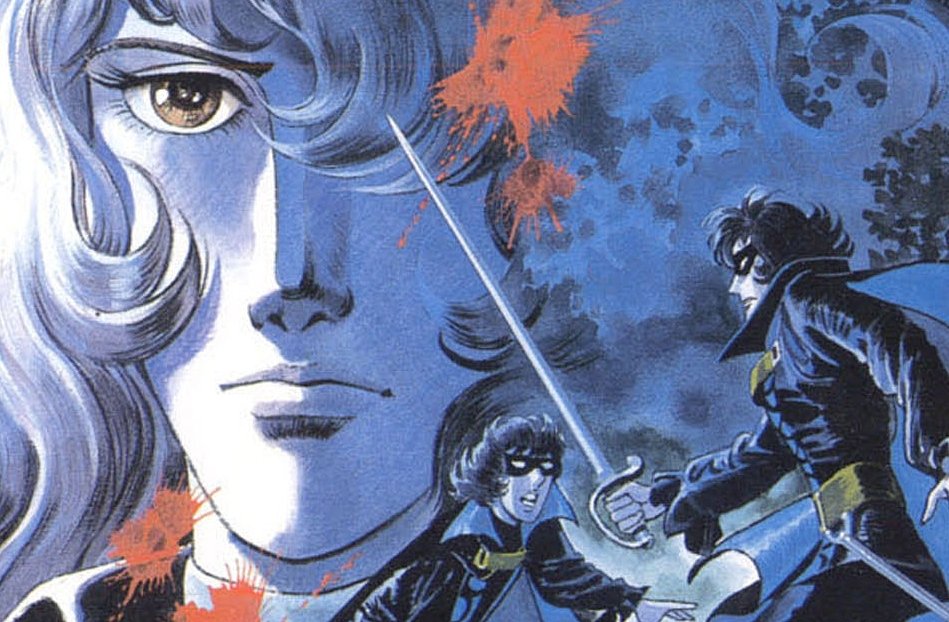

The Rose of Versailles (1979-1980): A sophisticated historical drama that showcased his mature narrative style


Space Adventure Cobra (1982): An adventure series that demonstrated his versatility


Golgo 13: The Professional (1983): Perhaps his technical masterpiece, featuring the first use of CGI in anime
A Personal Connection Across Decades
I first discovered these striking images during the lunch breaks that split the school day in two back in 1990s France. At the time, French television programming broadcast a massive wave of Japanese animation from the 70s and 80s. While I didn’t know it was Osamu Dezaki’s work sitting behind the screen back then, those deeply impactful images—held on screen for several breathless seconds—left an indelible impression on my young mind and ultimately shaped my own artistic sensibilities.
An Enduring Legacy
Dezaki’s influence extends far beyond his own spectacular body of work. His innovative techniques and emotionally driven storytelling approaches have inspired countless renowned directors, including cinematic heavyweights like Yoshiaki Kawajiri and Satoshi Kon. His unique ability to create emotional depth strictly through visual innovation has become a fundamental part of the global animation lexicon.
Sadly, Osamu Dezaki passed away in 2011 due to cancer, but his artistic spirit lives on in every dramatic pause, every stylized frame, and every emotional crescendo in modern anime. His work stands as a timeless reminder that animation isn’t solely about movement—it is about creating profound moments that resonate in viewers’ hearts long after the screen goes dark. Knowing exactly when to pause and let the emotion sink in is just as important as the motion itself.
The Pioneer of the Title Sequence
A short biography
Saul Bass was an American graphic designer and Oscar winner, best known for his designs for the title sequences of films.
Saul Bass was a visionary American graphic designer and Academy Award winner whose unique technique forever changed the landscape of film title sequences in the 1950s. Born on May 8, 1920, and passing on April 25, 1996, his influence can still be seen in the way we experience movies today. From his legendary opening sequences for films like Psycho, Casino, Cape Fear, and The Seven Year Itch, to his later work in 1993 on the title sequence for The Age of Innocence and poster concepts for Schindler’s List, his career spanned decades of cinematic history.
- A movie’s branding in a nutshell
- The ability to capture and present the essence of a film in a way that he could convey the atmosphere and premise of what the film was supposed to bring in an opening sequence that lasted a few minutes.
Under his influence, title sequence became an extension of film as art form in its ability to symbolize and summarize what the audience was to experience.
Saul bass’s opening sequences in amazing films such as Psycho, Casino, Cape Fear, The Seven Year Itch are legendary.
A New Visual Language for Movie Posters
His groundbreaking work on The Seven Year Itch brought him widespread recognition and established him as a major creative force in the film industry. However, his career truly took a pivotal turn in 1954 when he began working as a poster designer for director Otto Preminger. This sparked a twenty-five-year collaboration spanning a dozen films. From that point forward, Bass was the mastermind behind titles, posters, and advertising campaigns for over forty films by some of the most prominent directors of the era. His most celebrated works include unforgettable visual campaigns for Alfred Hitchcock’s Vertigo and Otto Preminger’s The Man with the Golden Arm and Anatomy of a Murder.
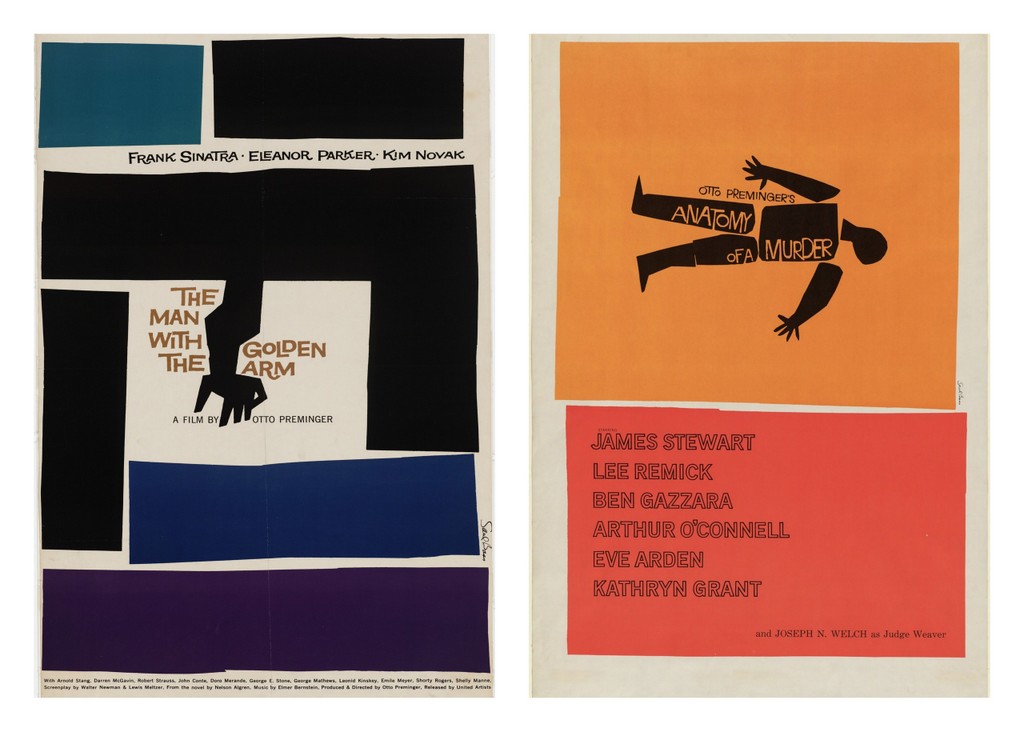
Before his revolutionary poster for The Man with the Golden Arm in 1955, movie marketing relied heavily on cluttered, juxtaposed depictions of key scenes and actors. Bass disrupted this standard by introducing simplified, symbolic designs that graphically communicated the central themes and essential elements of the film. He became the undisputed master of the movie poster and title sequence by mid-century. His designs remain iconic because of their stark simplicity, relying on bold color palettes and precise, angular, and sparse imagery. In just a few seconds of screen time, his recognizably minimalist style managed to distill the entire essence of a film, perfectly complemented by his clever print campaigns.
Redefining How We Experience Movies
Bass was part of a small, elite group of title designers, alongside pioneers like Friz Freleng and Maurice Binder, who redefined how a movie should begin. He effectively birthed the pre-movie title sequence as a storytelling device in its own right. Opening his own design studio in 1952, he managed to navigate the crumbling studio system of the 1950s and 1960s, securing a unique position of creative control.
Visual Consulting and Corporate Branding
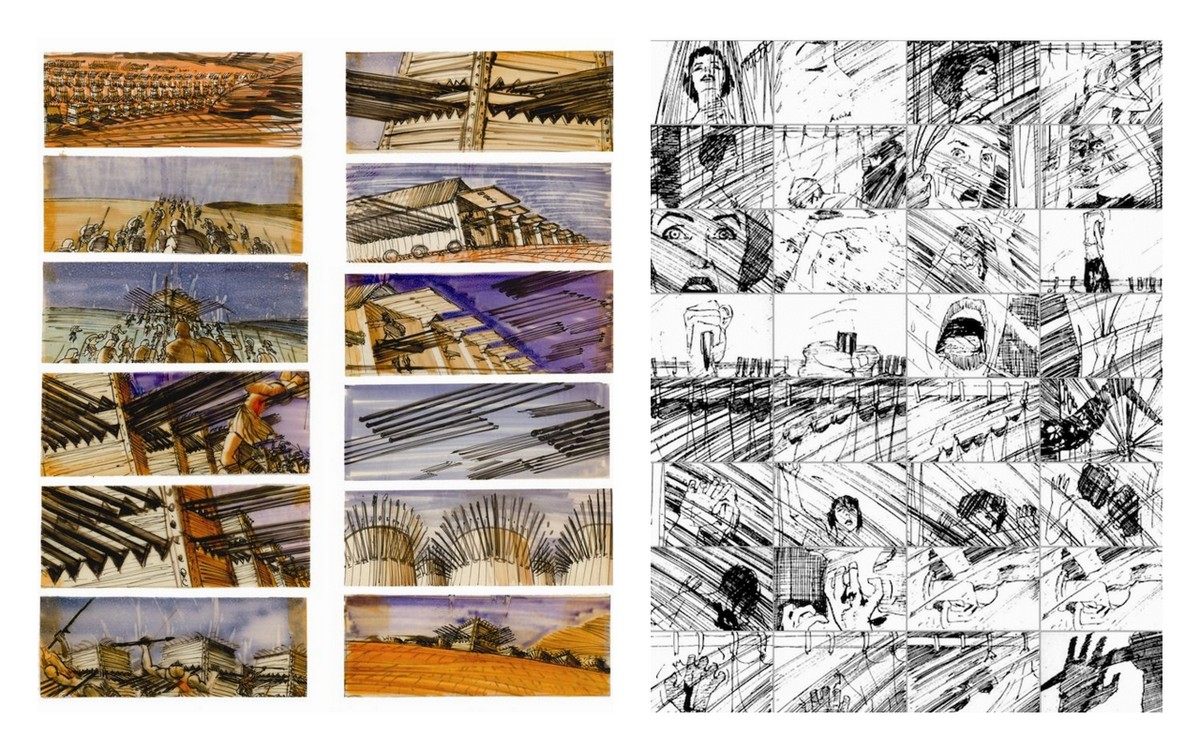
As the 1960s progressed, filmmakers and producers increasingly relied on Bass not just for title sequences, but to conceptualize and storyboard pivotal scenes. In fact, on five separate films, he was credited as a visual consultant or pictorial consultant. For example, he designed significant aspects of the gladiator school and storyboarded the final battle in Spartacus. For Grand Prix, director John Frankenheimer had Bass plot, direct, and edit almost every racing sequence. He also directed the prologue, storyboarded the opening dance scene, and designed the concluding title sequence for West Side Story.
Beyond his cinematic achievements, Bass was a titan in corporate branding. He designed some of the most recognizable logos of the twentieth century, including the 1969 Bell Telephone logo and the 1983 AT&T globe. His portfolio also included corporate identities for Continental Airlines, Dixie, and United Airlines.
His creative drive extended into directing as well. Bass helmed the sci-fi thriller Phase IV in 1974 and wrote, produced, and directed numerous short films. His 1968 documentary Why Man Creates even earned him an Academy Award for Best Documentary Short Subject.
The Title Designer as Filmmaker
While the average cinema-goer might assume a film’s director handles all image editing, the title designer is often the one responsible for pacing and cutting the title sequence. Because of this deep involvement in the visual rhythm of the film, many title designers operate as filmmakers in their own right. Bass frequently directed or advised on the live-action shoots for his title sequences, demonstrating a complete mastery of cinematography and editing.
A Lifetime of Cinematic Contributions
Throughout his incredible career, he served as a title creator for an expansive list of films. His early filmography includes Carmen Jones in 1954, followed by The Big Knife, The Man with the Golden Arm, The Racers, The Seven Year Itch, and The Shrike in 1955. In 1956, he worked on Around the World in Eighty Days, Storm Center, Attack, and Johnny Concho. The following year brought Edge of the City, Saint Joan, The Pride and the Passion, and The Young Stranger. 1958 saw his iconic work on Bonjour Tristesse, Cowboy, Vertigo, and The Big Country.
Here is the list of movies he worked on as a title creator :
- Carmen Jones (1954)
- The Big Knife (1955)
- The Man with the Golden Arm (1955)
- The Racers (1955)
- The Seven Year Itch (1955)
- The Shrike (1955)
- Around the World in Eighty Days (1956)
- Storm Center (1956)
- Attack (1956)
- Johnny Concho (1956)
- Edge of the City (1957)
- Saint Joan (1957)
- The Pride and the Passion (1957)
- The Young Stranger (1957)
- Bonjour Tristesse (1958)
- Cowboy (1958)
- Vertigo (1958)
- The Big Country (1958)
- Anatomy of a Murder (1959)
- North by Northwest (1959)
- Psycho (1960)
- Spartacus (1960)
- The Facts of Life (1960)
- Exodus (1960)
- Ocean’s 11 (1960)
- West Side Story (1961)
- Something Wild (1961)
- Advise & Consent (1962)
- Walk on the Wild Side (1962)
- The Victors (1963)
- Nine Hours to Rama (1963)
- It’s a Mad, Mad, Mad, Mad World (1963)
- The Cardinal (1963)
- In Harm’s Way (1965)
- Bunny Lake Is Missing (1965)
- Grand Prix (1966)
- Not with My Wife, You Don’t! (1966)
- Seconds (1966)
- Such Good Friends (1971)
- That’s Entertainment, Part II (1976)
- Broadcast News (1987)
- Big (1988)
- Tonkō (1988)
- The War of the Roses (1989)
- Goodfellas (1990)
- Cape Fear (1991)
- Doc Hollywood (1991)
- Mr. Saturday Night (1992)
- The Age of Innocence (1993)
- Higher Learning (1995)
- Casino (1995)
- A Personal Journey with Martin Scorsese Through American Movies (1995)
For a deeper dive into his visual style and incredible body of work, I highly recommend checking out https://www.notcoming.com/ to read and watch more about his enduring legacy.