
The Pioneer of the Title Sequence
A short biography
Saul Bass was an American graphic designer and Oscar winner, best known for his designs for the title sequences of films.
Saul Bass was a visionary American graphic designer and Academy Award winner whose unique technique forever changed the landscape of film title sequences in the 1950s. Born on May 8, 1920, and passing on April 25, 1996, his influence can still be seen in the way we experience movies today. From his legendary opening sequences for films like Psycho, Casino, Cape Fear, and The Seven Year Itch, to his later work in 1993 on the title sequence for The Age of Innocence and poster concepts for Schindler’s List, his career spanned decades of cinematic history.
- A movie’s branding in a nutshell
- The ability to capture and present the essence of a film in a way that he could convey the atmosphere and premise of what the film was supposed to bring in an opening sequence that lasted a few minutes.
Under his influence, title sequence became an extension of film as art form in its ability to symbolize and summarize what the audience was to experience.
Saul bass’s opening sequences in amazing films such as Psycho, Casino, Cape Fear, Seven Years and The Itch are legendary.
A New Visual Language for Movie Posters
His groundbreaking work on The Seven Year Itch brought him widespread recognition and established him as a major creative force in the film industry. However, his career truly took a pivotal turn in 1954 when he began working as a poster designer for director Otto Preminger. This sparked a twenty-five-year collaboration spanning a dozen films. From that point forward, Bass was the mastermind behind titles, posters, and advertising campaigns for over forty films by some of the most prominent directors of the era. His most celebrated works include unforgettable visual campaigns for Alfred Hitchcock’s Vertigo and Otto Preminger’s The Man with the Golden Arm and Anatomy of a Murder.
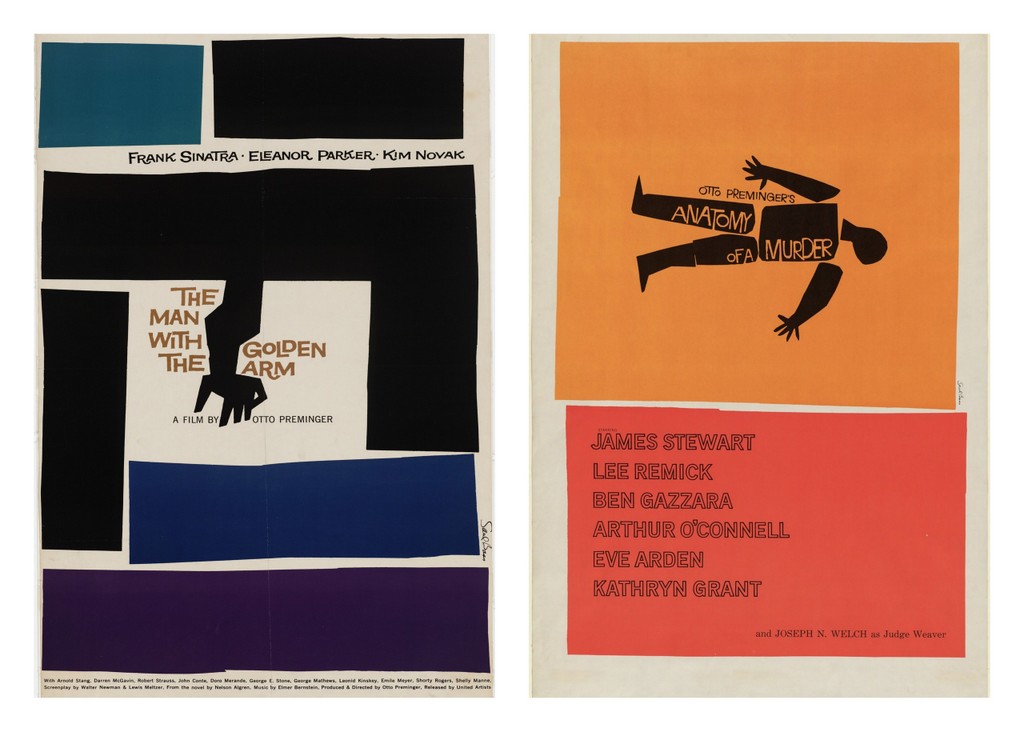
Before his revolutionary poster for The Man with the Golden Arm in 1955, movie marketing relied heavily on cluttered, juxtaposed depictions of key scenes and actors. Bass disrupted this standard by introducing simplified, symbolic designs that graphically communicated the central themes and essential elements of the film. He became the undisputed master of the movie poster and title sequence by mid-century. His designs remain iconic because of their stark simplicity, relying on bold color palettes and precise, angular, and sparse imagery. In just a few seconds of screen time, his recognizably minimalist style managed to distill the entire essence of a film, perfectly complemented by his clever print campaigns.
Redefining How We Experience Movies
Bass was part of a small, elite group of title designers, alongside pioneers like Friz Freleng and Maurice Binder, who redefined how a movie should begin. He effectively birthed the pre-movie title sequence as a storytelling device in its own right. Opening his own design studio in 1952, he managed to navigate the crumbling studio system of the 1950s and 1960s, securing a unique position of creative control.
Visual Consulting and Corporate Branding
As the 1960s progressed, filmmakers and producers increasingly relied on Bass not just for title sequences, but to conceptualize and storyboard pivotal scenes. In fact, on five separate films, he was credited as a visual consultant or pictorial consultant. For example, he designed significant aspects of the gladiator school and storyboarded the final battle in Spartacus. For Grand Prix, director John Frankenheimer had Bass plot, direct, and edit almost every racing sequence. He also directed the prologue, storyboarded the opening dance scene, and designed the concluding title sequence for West Side Story.
Beyond his cinematic achievements, Bass was a titan in corporate branding. He designed some of the most recognizable logos of the twentieth century, including the 1969 Bell Telephone logo and the 1983 AT&T globe. His portfolio also included corporate identities for Continental Airlines, Dixie, and United Airlines.
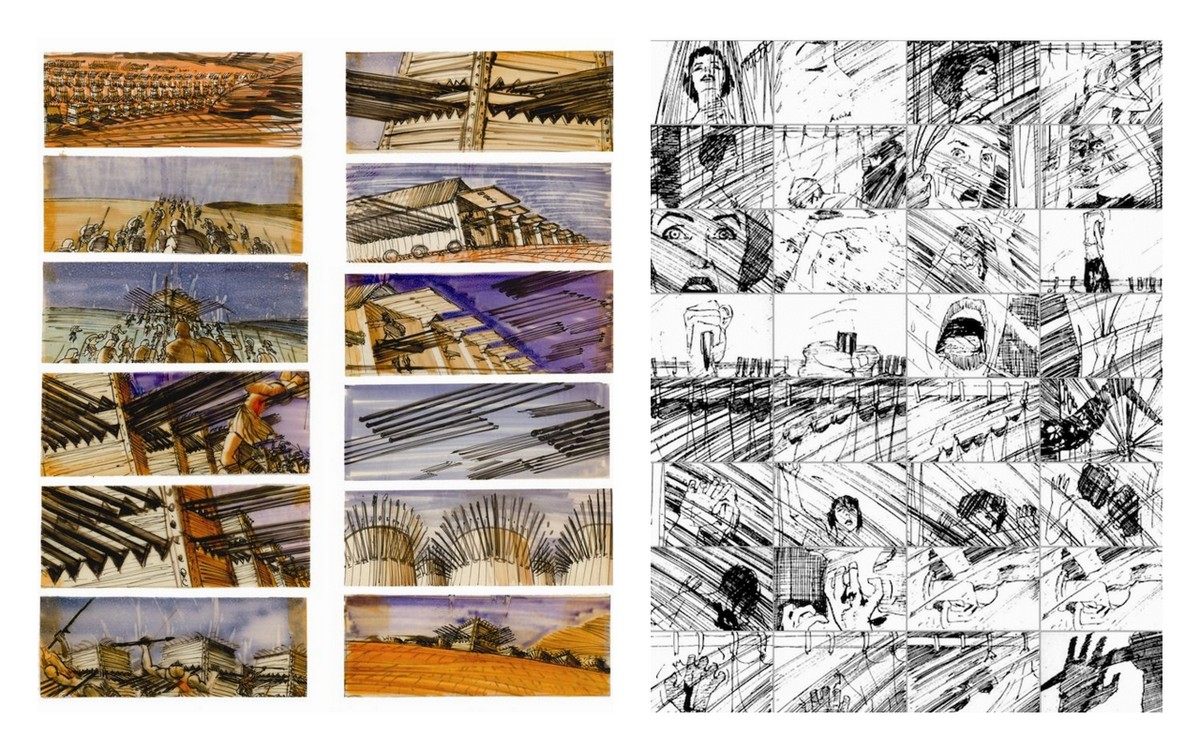
His creative drive extended into directing as well. Bass helmed the sci-fi thriller Phase IV in 1974 and wrote, produced, and directed numerous short films. His 1968 documentary Why Man Creates even earned him an Academy Award for Best Documentary Short Subject.
The Title Designer as Filmmaker
While the average cinema-goer might assume a film’s director handles all image editing, the title designer is often the one responsible for pacing and cutting the title sequence. Because of this deep involvement in the visual rhythm of the film, many title designers operate as filmmakers in their own right. Bass frequently directed or advised on the live-action shoots for his title sequences, demonstrating a complete mastery of cinematography and editing.
A Lifetime of Cinematic Contributions
Throughout his incredible career, he served as a title creator for an expansive list of films. His early filmography includes Carmen Jones in 1954, followed by The Big Knife, The Man with the Golden Arm, The Racers, The Seven Year Itch, and The Shrike in 1955. In 1956, he worked on Around the World in Eighty Days, Storm Center, Attack, and Johnny Concho. The following year brought Edge of the City, Saint Joan, The Pride and the Passion, and The Young Stranger. 1958 saw his iconic work on Bonjour Tristesse, Cowboy, Vertigo, and The Big Country.
Here is the list of movies he worked on as a title creator :
- Carmen Jones (1954)
- The Big Knife (1955)
- The Man with the Golden Arm (1955)
- The Racers (1955)
- The Seven Year Itch (1955)
- The Shrike (1955)
- Around the World in Eighty Days (1956)
- Storm Center (1956)
- Attack (1956)
- Johnny Concho (1956)
- Edge of the City (1957)
- Saint Joan (1957)
- The Pride and the Passion (1957)
- The Young Stranger (1957)
- Bonjour Tristesse (1958)
- Cowboy (1958)
- Vertigo (1958)
- The Big Country (1958)
- Anatomy of a Murder (1959)
- North by Northwest (1959)
- Psycho (1960)
- Spartacus (1960)
- The Facts of Life (1960)
- Exodus (1960)
- Ocean’s 11 (1960)
- West Side Story (1961)
- Something Wild (1961)
- Advise & Consent (1962)
- Walk on the Wild Side (1962)
- The Victors (1963)
- Nine Hours to Rama (1963)
- It’s a Mad, Mad, Mad, Mad World (1963)
- The Cardinal (1963)
- In Harm’s Way (1965)
- Bunny Lake Is Missing (1965)
- Grand Prix (1966)
- Not with My Wife, You Don’t! (1966)
- Seconds (1966)
- Such Good Friends (1971)
- That’s Entertainment, Part II (1976)
- Broadcast News (1987)
- Big (1988)
- Tonkō (1988)
- The War of the Roses (1989)
- Goodfellas (1990)
- Cape Fear (1991)
- Doc Hollywood (1991)
- Mr. Saturday Night (1992)
- The Age of Innocence (1993)
- Higher Learning (1995)
- Casino (1995)
- A Personal Journey with Martin Scorsese Through American Movies (1995)
For a deeper dive into his visual style and incredible body of work, I highly recommend checking out https://www.notcoming.com/ to read and watch more about his enduring legacy.